Laos is laying the groundwork for a decade of digital transformation, with artificial intelligence (AI) and satellite technology identified as two important tools for national development.
Two proposed strategies for 2026–2035
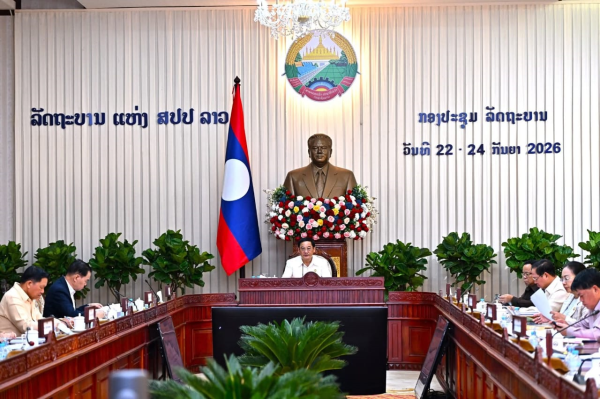
The Lao government has considered two long-term policy frameworks: the draft National Artificial Intelligence Strategy for 2026–2035 and the draft Strategy for the Development and Use of Satellites in Laos for 2026–2035. The proposals were discussed at the government’s September 22–23, 2026 monthly meeting chaired by Prime Minister Sonexay Siphandone.
Government reporting said the draft strategies were approved in principle, while officials were instructed to refine the documents in response to comments and clarify priorities, investment needs and cooperation arrangements. This is an important policy direction, but it should not be read as confirmation that every measure has already been fully adopted or implemented.
Where AI could make a difference
The proposed AI strategy places emphasis on the foundations needed for responsible and useful deployment: digital infrastructure, reliable databases and a skilled workforce. It also calls for clear priorities so that investment is directed toward areas where AI can deliver practical benefits.
Potential applications include improving agricultural planning, analysing weather and flood information, supporting environmental protection, strengthening transport planning and making public services more efficient. AI systems can help process large volumes of information, but their value depends on good-quality data, appropriate oversight and people with the skills to use them.
Why satellite technology matters
Satellite systems can provide wide-area information that is difficult or costly to collect on the ground. Combined with AI and local data, satellite imagery and related services can support crop monitoring, disaster preparedness, flood and weather monitoring, environmental management and infrastructure planning.
For a country with varied terrain and communities spread across rural areas, these capabilities could help authorities make better-informed decisions and improve the reach of public services. The strategy will need to define practical priorities, financing and partnerships to turn that potential into results.
Building the foundations—and attracting investment
The government’s discussions also highlighted the need to clarify investment and international cooperation conditions. The broader national investment agenda has identified data centres, AI and other digital industries as areas with potential to attract higher-value projects and diversify the economy.
However, technology investment alone will not guarantee success. Progress will also depend on dependable connectivity, secure data governance, electricity and computing capacity, education and vocational training, research partnerships, and policies that encourage innovation while protecting the public interest.
What businesses and communities should watch
For Lao businesses, universities and technology providers, the proposed strategies may create opportunities in software, data services, telecommunications, geospatial analysis, digital agriculture, education and workforce development. Small businesses could also benefit from more accessible digital tools and improved public services if the plans translate into practical programmes.
The next indicators to watch are the revised versions of the strategies, clearly assigned responsibilities, funding and implementation timelines, pilot projects, and measurable outcomes. These details will show how quickly the policy direction moves from planning to real services and economic activity.
The bigger picture
Laos’s proposed AI and satellite strategies signal an ambition to use advanced technology to support development over the next decade. Their impact will depend less on the technology’s headline potential than on careful implementation: building infrastructure, developing local talent, protecting data, and choosing projects that solve real problems for people and businesses.
Sources:
Khaosan Pathet Lao (KPL): Government Reviews September Performance, Sets Priorities for October (24 September 2026)
The Star / Vientiane Times: Laos advances 10-year strategies for AI and satellite development (24 September 2026)
Prepared by Thangleuok, based on publicly reported government information.