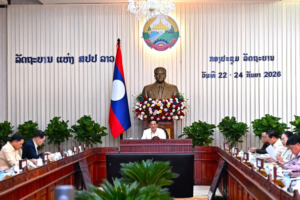

Laos is laying the groundwork for a decade of digital transformation, with artificial intelligence (AI) and satellite technology identified as two strategic priorities for 2026–2035. The government’s September 2026 meeting agreed in principle to the two draft strategies and called for further revisions before implementation.
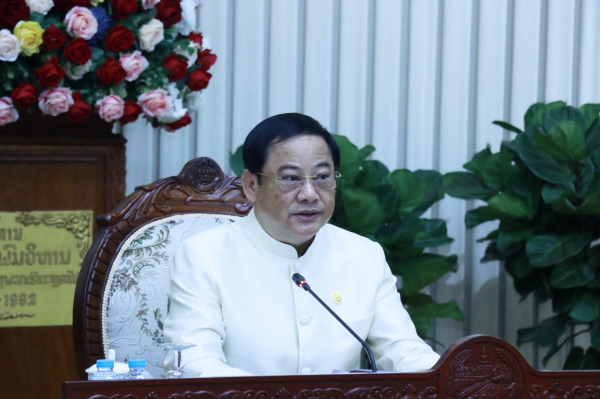
Two strategies set a 10-year direction
At its ordinary monthly meeting on 22–23 September 2026, chaired by Prime Minister Sonexay Siphandone, the Lao government considered a draft National Artificial Intelligence Strategy for 2026–2035 and a draft Strategy for the Development and Utilisation of Satellites in the Lao PDR for 2026–2035.
The government agreed in principle to the two strategic directions, while instructing the Ministry of Technology and Communications and relevant agencies to revise the drafts in line with comments from government members. This is an important distinction: the strategies were still being refined, rather than being presented as fully implemented programmes.
What the AI strategy needs to address
For AI, the government called for stronger foundations in digital infrastructure, databases and skilled personnel. It also wants the strategy to identify clear priority applications—areas where AI can deliver practical benefits—and clarify the conditions for investment and international cooperation. The government has also emphasised a neutral approach to technological cooperation.
These priorities matter because AI is not simply a software purchase. Its usefulness depends on reliable connectivity, high-quality and responsibly managed data, capable institutions, and people who can develop, operate and evaluate the systems. Without those foundations, projects risk remaining small pilots that do not translate into better public services or productivity.
Why satellite technology matters
The draft satellite strategy is intended to clarify the country’s priorities for using satellite technology, as well as the investment and cooperation needed to develop its capabilities. Satellite systems can provide wide-area information that is difficult or expensive to collect on the ground.
Potential applications include monitoring crops and land use, tracking weather and floods, observing environmental changes, supporting transport planning and improving public services. Satellite imagery and other remote-sensing data can show what is happening across large areas; AI can help analyse those datasets, identify patterns and support faster decisions.
Where AI and satellites can work together
- Agriculture: Satellite imagery and AI analysis could help monitor crop conditions, identify drought stress and support more informed farm planning.
- Disaster preparedness: Combining weather information, satellite observations and analytical tools could strengthen flood and severe-weather monitoring.
- Environmental protection: Repeated observations can help track land-use changes, forest conditions and other environmental pressures.
- Transport and infrastructure: Geospatial data can support planning, maintenance and monitoring across roads and other infrastructure.
- Public services: Better data and digital skills could help agencies plan services and allocate resources more effectively.
These are potential use cases, not a claim that nationwide systems are already operating. Their success will depend on funding, data access, technical capacity, clear responsibilities and long-term maintenance.
Building skills, inclusion and responsible governance
Laos has already begun examining the policy and social conditions needed for responsible AI. In January 2026, the government announced that its national AI strategy would draw on UNESCO’s AI Ethics Readiness Assessment Methodology. The assessment highlights issues including policy and regulation, institutional coordination, human capacity, infrastructure and social impact. It also points to challenges such as unequal access to technology, skills development and research capacity.
That broader perspective is essential. A successful digital strategy should not only attract technology investment; it should help Lao students, workers, businesses and communities gain the skills and access needed to benefit. It should also address privacy, security, transparency and accountability as AI systems are introduced.
Investment opportunities—and the work ahead
The AI and satellite strategies align with Laos’ wider 2026–2030 investment agenda, which identifies data centres, AI, information technology and financial technology as areas with potential. The government’s stated ambition is to attract higher-value projects, develop a skilled workforce and connect Lao businesses with regional and international value chains.
The next test will be turning strategic direction into practical plans: setting measurable goals, identifying responsible agencies, establishing budgets and partnerships, developing local expertise, and publishing progress. Transparent procurement, sustainable operating costs and safeguards for data and citizens will also be important.
What to watch next
For businesses, educators and technology partners, the most useful signals will be the final versions of the two strategies, the priority projects they identify, and the rules governing investment and cooperation. For the public, the key question is whether these technologies improve everyday outcomes—from more resilient agriculture and better disaster warnings to more accessible and effective public services.
Laos’ proposed 2026–2035 roadmap is an ambitious direction of travel. Its long-term impact will depend less on the technology’s promise than on the quality of implementation, inclusive access and the ability to turn data into practical benefits for people across the country.
Sources
- Khaosan Pathet Lao (KPL): Government Meeting Reviews 16 Key Topics for September and October Priorities (22 September 2026).
- Asia News Network / Vientiane Times: Laos government advances 10-year strategies for AI, satellite development (25 September 2026).
- UNESCO: Lao PDR sets course for National AI Strategy guided by UNESCO ethics framework (28 January 2026).
Reporting note: This article summarises publicly reported government discussions and policy direction available as of 19 November 2026. The two 2026–2035 strategy documents were reported as drafts under revision in the cited September update.